
Stretching Routine for Beginners: 10 Simple Daily Moves
You know the feeling: you sit at your desk for hours, then stand up and your hips feel tight, your shoulders sit high, and your lower back complains before you’ve even started the day. A simple stretching routine can ease that stiffness and help your body move with less effort.
That matters because tight muscles can make everyday life feel harder than it should. When you stretch in a steady, gentle way, you can improve flexibility, ease common aches, support better posture, and make walking, bending, and reaching feel smoother. For beginners, office workers, and anyone easing into fitness, that kind of daily relief can be a smart place to start.
You do not need a long workout or fancy gear to get there. In fact, a short stretching routine done most days can fit into your morning, your lunch break, or the few minutes before bed. Start small, stay consistent, and focus on simple moves that help the parts of your body that tend to tighten first, especially your neck, shoulders, hips, hamstrings, and lower back.
A good stretching habit should feel gentle, not forced. If a stretch feels sharp or painful, back off and adjust your position.
This post keeps things simple and practical, so you can build confidence without guessing your way through it. You’ll see why stretching helps, how to stay safe while you do it, and how to follow a daily routine that doesn’t take much time. You’ll also get targeted stretches for common problem spots, like desk-related tension and lower-back tightness, which are two of the most common reasons people start looking for a stretching routine in the first place.
You’ll also see what not to worry about. A lot of people think stretching has to be intense, painful, or saved for athletes, but that idea keeps beginners stuck. The truth is much simpler: a calm, consistent routine can help you move better, feel less stiff, and build a habit that actually lasts.
If you’ve been meaning to take better care of your body, this is a solid place to begin. The next section shows you how stretching works, why it helps, and how to make it part of your day without overthinking it.
Why Your Body Craves a Daily Stretching Routine
Your body notices more than you think. When you sit too long, sleep in one position, or move through the same patterns every day, your muscles start to feel tight and your joints lose some of their easy motion. A daily stretching routine gives your body a chance to reset, so simple moves feel less stiff and less effortful.
That craving for stretching is often a sign of low movement variety, not a serious problem. Your muscles and joints do best when they move through a full range on a regular basis. Daily stretching can help restore that range, especially if your day keeps you in one position for hours.
Why stiffness builds so fast
Sitting, driving, and working at a desk keep certain muscles in the same shortened position. Over time, your hips, chest, neck, and hamstrings often feel tight because they are not being used through their full range. Meanwhile, other muscles have to pick up the slack, which can make your body feel off balance.
A short stretching routine helps interrupt that pattern. It reminds your body how to lengthen, rotate, and reach again. As a result, bending to tie your shoes or standing up from your chair can feel much smoother.
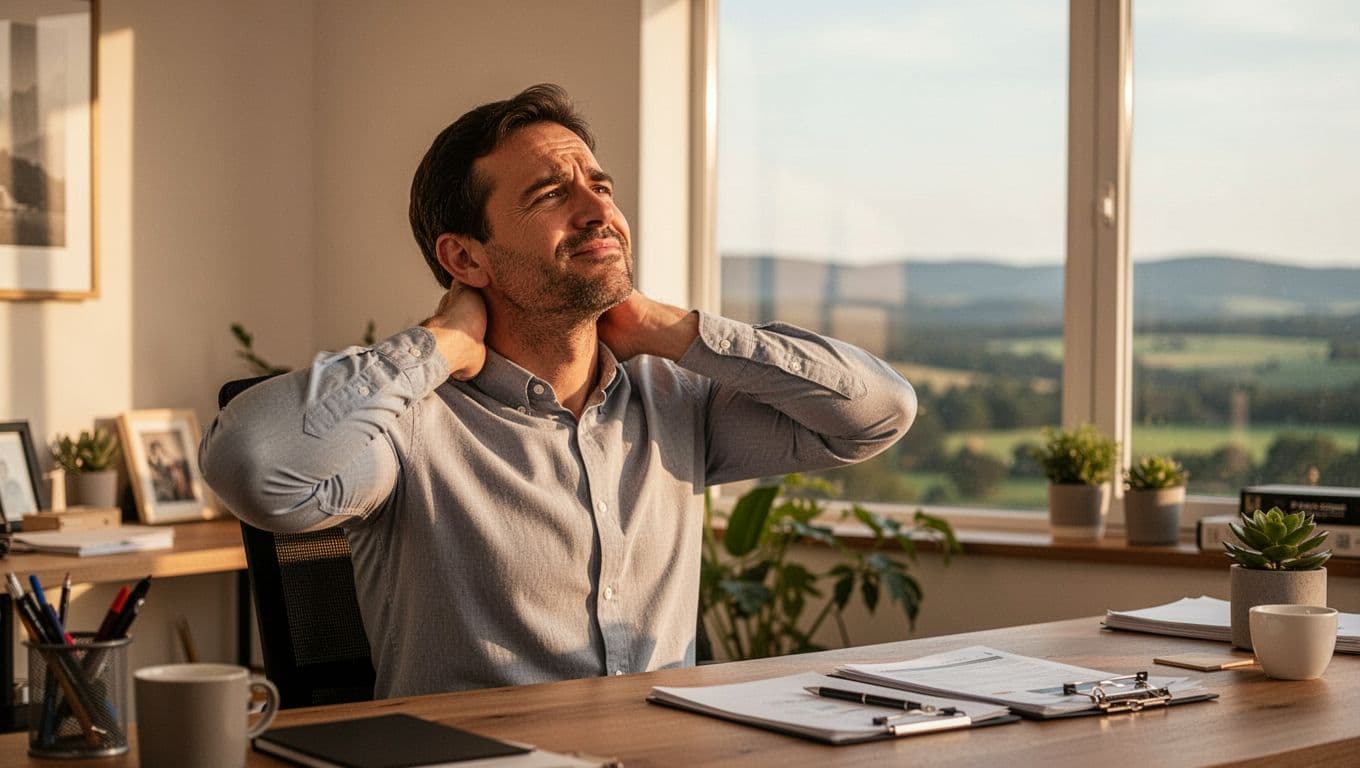
What daily stretching can help you feel
When you stretch often, your body usually responds with better ease of movement. That matters because daily life asks a lot from you, even when you are not exercising. Reaching overhead, turning your head, or walking up stairs all depend on how freely your joints move.
A consistent stretching routine can support:
- Better flexibility, so your muscles do not feel so locked up
- Less day-to-day stiffness, especially after long periods of sitting
- Improved posture comfort, since your chest, shoulders, and hips move more easily
- Smoother movement, which helps with walking, bending, and reaching
A few gentle stretches each day can do more for your comfort than one hard session once a week.
Why consistency matters more than intensity
Your body usually responds better to steady practice than to a big effort once in a while. In fact, short daily stretching often works well for beginners because it feels manageable. That makes it easier to stick with, and sticking with it is what changes how your body feels over time.
You do not need to push hard or chase pain. Gentle, regular stretching gives your muscles time to relax and adapt. When you keep it simple, your routine becomes something you can actually maintain, which is the real win.
Stretch Smart: Key Rules for Beginners to Stay Safe
A good stretching routine should feel steady and controlled. You want gentle tension, not strain, because pushing too far can make your muscles tighten up instead of relax. That’s why the safest beginner habits are simple: warm up first, move slowly, and pay attention to what your body tells you.
If you’re new to stretching, the goal is comfort and consistency. You do not need to be flexible right away. You just need to give your muscles time to open up without forcing them.
Warm up before you stretch
Cold muscles are less ready to lengthen, so a short warm-up makes a real difference. Walk for 5 to 10 minutes, march in place, or do a few easy arm circles before you start.
That small step helps blood flow and makes each stretch feel smoother. If you stretch right after a workout, that works well too, because your body is already warm.
Keep the pull gentle
Your stretch should feel like a mild tug, not a sharp pinch. If you bounce, jam into the position, or chase a deeper range too fast, you raise your risk of irritation.
A simple rule helps here: back off before pain starts. Mild tension is useful, but pain means you’ve gone too far.
Breathe and hold without rushing
Breathing matters more than many beginners expect. When you hold your breath, your body tends to brace, and the stretch feels harder.
Instead, breathe slowly and keep each stretch steady for about 15 to 30 seconds. You can repeat it a few times on each side if it still feels comfortable.
If a stretch feels sharp, numbing, or painful, stop and reset your position.
Stay smart with your limits
Your body will feel different from day to day. Some mornings you’ll move easily, and other days you’ll feel tight. That’s normal.
Use these safety checks to guide you:
- No pain during the stretch
- No bouncing or jerking
- No breath holding
- No forcing a deeper range
- No skipping warm-up when you feel stiff
If you’re recovering from an injury, dealing with joint pain, or unsure about a movement, start with a smaller range and ask a health professional for advice. That extra caution keeps your routine helpful, not frustrating.
Build Flexibility Fast with This 10-Minute Beginner Stretching Routine
If you want better flexibility without turning it into a full workout, this is a smart place to start. A short stretching routine works best when it hits the spots that tighten first, then gives each area enough time to ease up.
You do not need to force deep stretches to feel a difference. In fact, gentle daily movement often helps more, because your body relaxes when the stretch feels safe and steady.
Lower Body Stretches to Loosen Tight Legs and Hips
Start with your calves. Stand facing a wall, place both hands on it, and step one foot back with the heel down. Bend your front knee and keep the back leg straight, which stretches the calf and the lower leg, and helps if your ankles feel stiff when you walk or climb stairs.
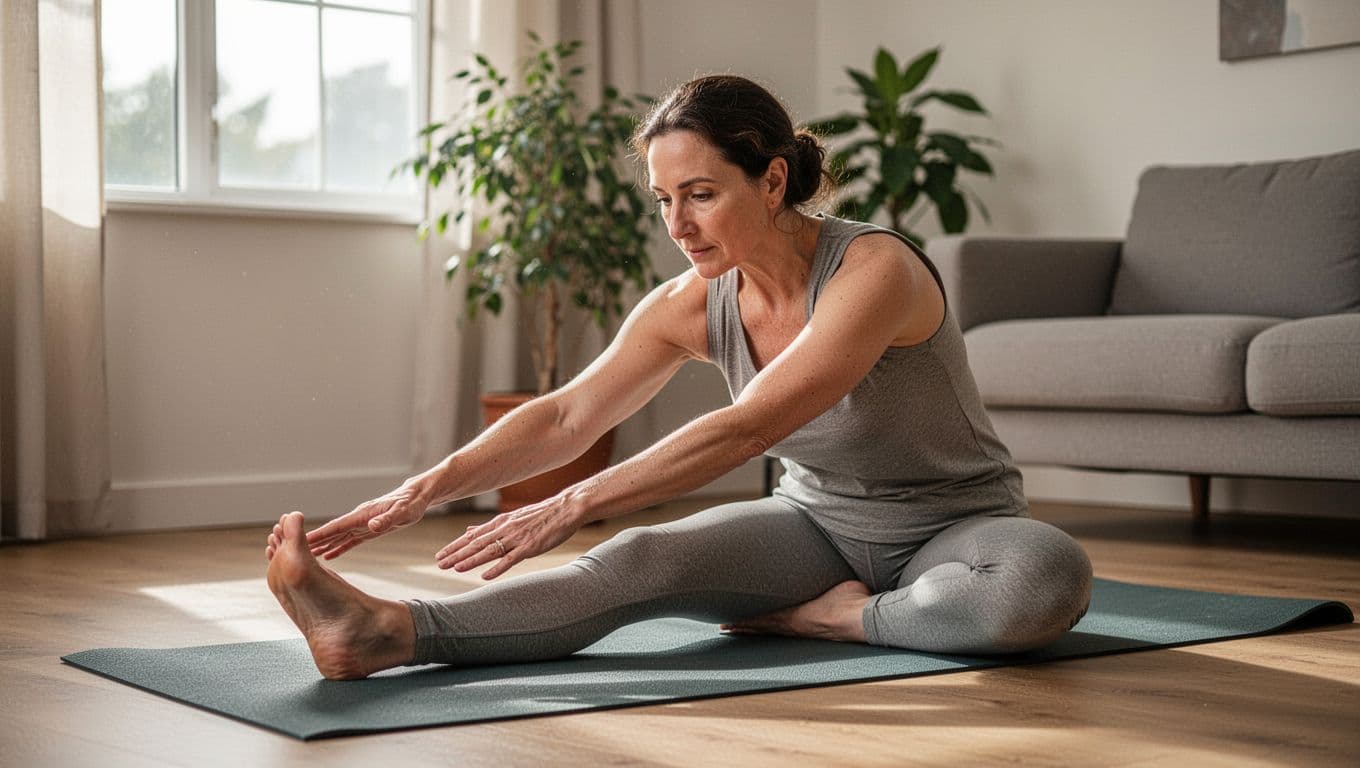
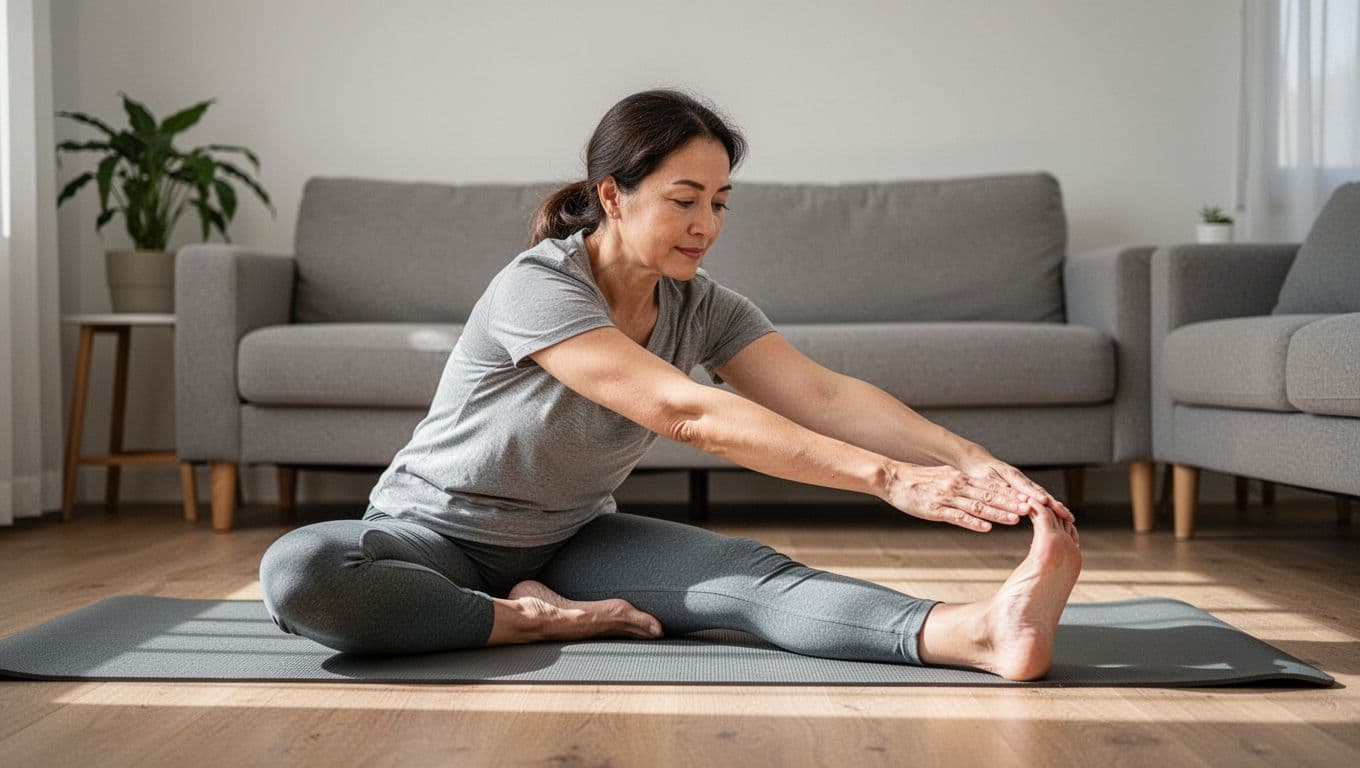
Next, try a hamstring stretch. Sit on the floor with one leg out straight and the other leg bent in, then reach toward the toes of the straight leg while keeping your back long. This targets the back of your thigh, and it helps beginners because tight hamstrings often make bending forward feel harder than it should.
For your quads, stand near a wall or chair for balance, bend one knee, and bring your heel toward your glute. Hold your ankle or just rest your hand on your foot if that feels better. This opens the front of your thigh, and it can help if sitting all day leaves your knees and hips feeling locked up.
Your hip flexors also need attention, especially if you sit a lot. Step one foot forward into a lunge, lower the back knee, and gently push your hips forward while keeping your chest up. This stretch can ease the tight front of the hip, which often pulls your posture forward and makes standing feel stiff.
For the inner thighs, sit with the soles of your feet together and let your knees fall out to the sides. Hold your feet or ankles, sit tall, and lean forward only a little if it feels good. This stretch helps open the groin area, and beginners often notice it makes hip movement feel less restricted.
Upper Body and Back Moves for Better Posture
A forward fold is one of the easiest ways to release the back of your body. Stand with soft knees, hinge at your hips, and let your arms and head hang toward the floor. This stretch lengthens the hamstrings and lower back, and it can feel especially good if desk work leaves you bent forward all day.
For your upper back, add a seated twist. Sit tall in a chair, place one hand on the backrest, and gently rotate your torso to one side. This movement helps the spine turn more easily, while also loosening the muscles around your ribs and mid-back that often tighten when you hunch over a keyboard.
A chest stretch helps reverse that rounded position. Stand in a doorway, place your forearms on the frame, and step one foot forward until you feel the chest open. That stretch targets the front of your shoulders and chest, which often get tight from slouching and mouse use.
Your lats can stay tight too, especially if your shoulders feel heavy. Reach both arms overhead, then bend slightly to one side, or rest your hands on a wall and sit your hips back. This stretches the broad muscles along your sides and helps your arms move with less pull.
Finally, give your traps a break. Sit or stand tall, drop one ear toward one shoulder, and let the opposite shoulder stay heavy. This helps release the upper neck and shoulder area, which often carries the stress of a long desk day.
A few minutes of these upper body moves can change how your whole posture feels. If your shoulders sit high or your back feels stiff, this part of your stretching routine helps bring things back into line without strain.
Custom Stretches for Desk Aches, Runner Recovery, and Posture Fixes
Some stretch needs are more specific than others. If you sit all day, run often, or catch yourself slouching, a general routine helps, but targeted moves help faster. That is because certain muscles take more strain in each situation, and they usually need a little extra care.
You can keep this simple. Pick the stretch group that matches your day, hold each move with control, and stay within a range that feels easy to manage. A few focused minutes often does more than forcing a long routine you won’t repeat.
Quick Desk Stretches to Undo Hours of Sitting
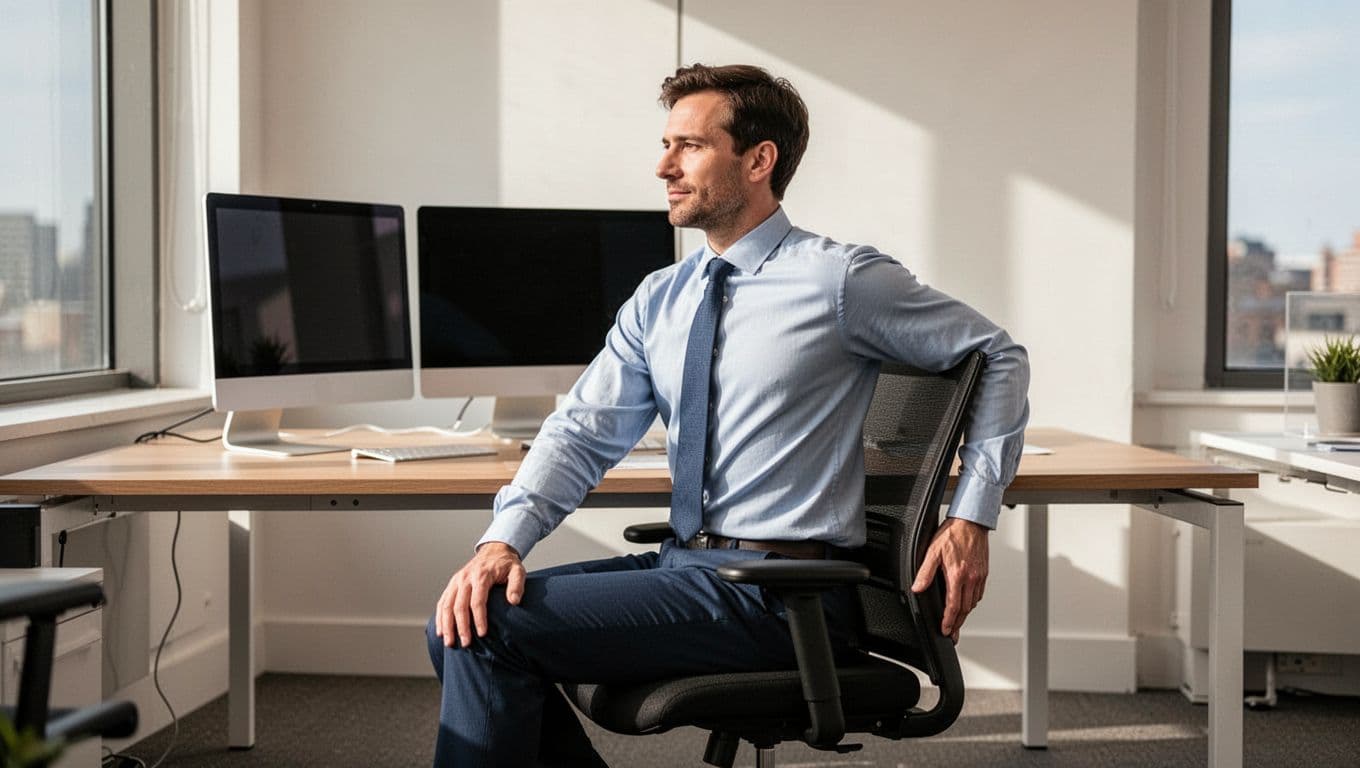
Desk work tends to tighten your chest, hips, and upper back at the same time. A seated twist can help wake up your spine, while a doorway chest stretch opens the front of your shoulders. Add a forward fold at your desk, and you give your back and hamstrings a break without leaving your workspace.
For the seated twist, sit tall, plant both feet, and turn gently to one side while holding the chair or desk for support. Keep the movement small and smooth. For the chest stretch, stand in a doorway, place your forearms on the frame, and step forward until you feel a mild pull across your chest. That is usually enough.
A desk forward fold works well when you need a quick reset. Sit on the edge of your chair, hinge at the hips, and let your head and arms drop toward the floor. Breathe slowly and keep your knees soft. Even one round can help you feel less folded in half by the end of the day.
Gentle Lower Back Stretches for Pain Relief
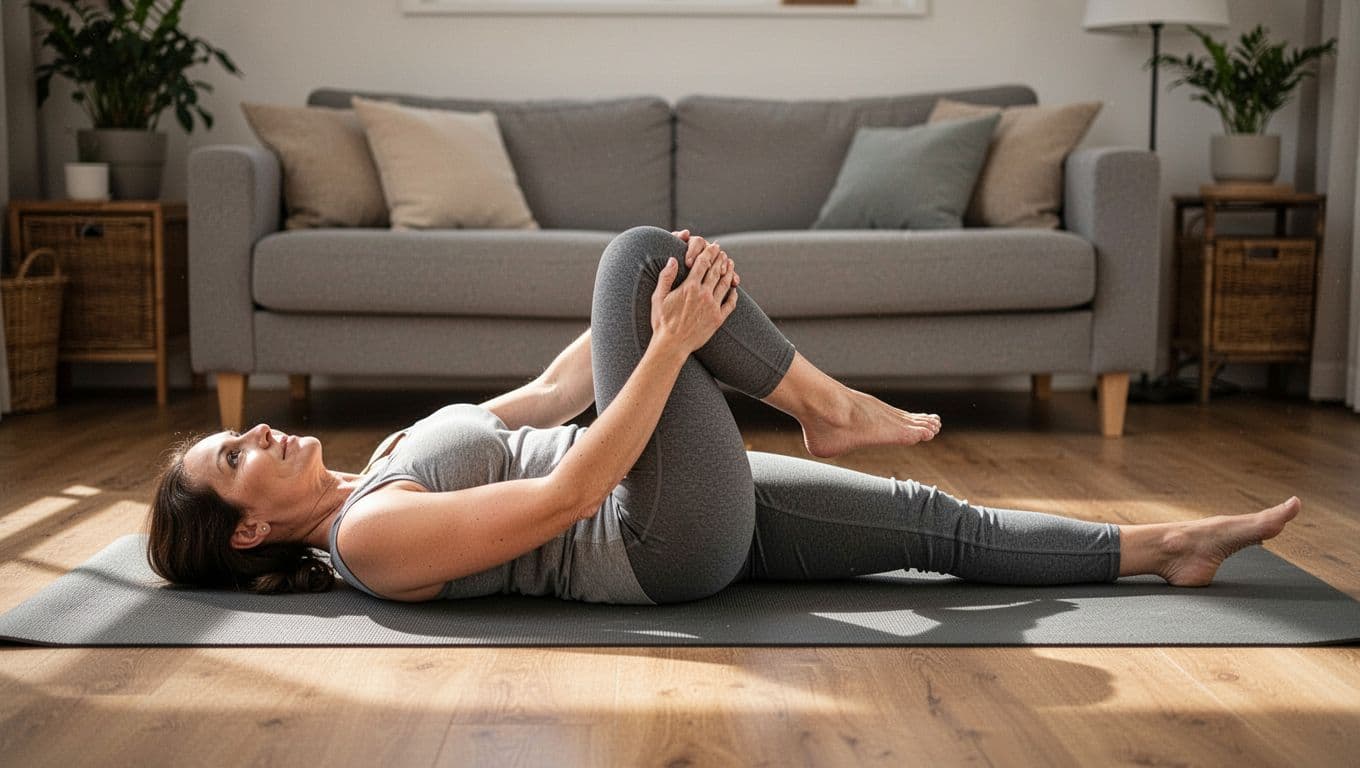
When your lower back feels sore, the safest place to start is with small, controlled movements. Pelvic tilts are a good first step because they teach your lower back to move without strain. Lie on your back with your knees bent, then flatten your low back gently into the floor and release.
If that feels good, try a knee-to-chest stretch. Bring one knee in slowly, hold behind the thigh or on the shin, and let the other leg rest on the floor. This can ease tightness through the lower back and hips. Switch sides so both hips get attention.
A seated twist is another beginner-friendly option. Sit upright in a chair, place one hand on the opposite knee or chair back, and rotate a little at a time. Keep your shoulders down and your breath steady. If your back is irritated, make the twist smaller, not deeper. That small adjustment often makes the stretch safer and more useful.
A gentle stretch should leave you feeling looser, not guarded. If your body starts bracing, you are pushing too hard.
Runner-Friendly Stretches to Prevent Tightness
Running asks a lot from your calves, hamstrings, and hips. After a run, those areas often feel short and tight, especially if you also spent the day sitting. A runner’s lunge helps open the front of the hip, which can get stiff fast when you repeat the same stride again and again.
Step one foot forward into a lunge, lower the back knee if needed, and shift your hips forward with control. Keep your torso tall so you feel the stretch in the front of the hip, not the low back. Hold it for a few breaths, then switch sides.
A hamstring stretch also belongs in your post-run routine. Sit with one leg extended or rest your heel on a low step, then hinge forward from the hips. Reach only as far as you can while keeping your back long. You want a steady pull, not a tugging sensation.
Finish with a calf stretch. Stand near a wall, place one foot back, and press the heel down. Straightening the back knee helps target the lower calf, while a slight bend catches a different part of the muscle. That matters because tight calves can affect how your whole lower leg feels when you run again.
Stretches That Straighten Your Posture
Poor posture often shows up as tight chest muscles, stiff necks, and a back that wants to round forward. A chest opener is one of the simplest ways to reverse that pattern. Stand in a doorway, brace your forearms, and let your chest widen as you step through.

For your upper back, try a gentle back rotation. Sit tall, keep your hips facing forward, and turn through your ribcage instead of forcing the motion from your neck. This helps your spine move in a cleaner way and can ease that stiff, stuck feeling after long computer use.
Neck and trap stretches matter too. Tilt one ear toward one shoulder, let the opposite shoulder stay heavy, and breathe into the side of your neck. You can also add a slow chin tuck during the day, which helps reset the forward-head posture many people build at a desk. A few minutes at a time is enough if you do it often.
To make this part of your stretching routine, attach it to something you already do. Stretch after brushing your teeth, after your lunch break, or right after your evening walk. Small habits stick better than perfect ones.
Skip These Stretching Traps and Myths Newbies Fall For
A beginner-friendly stretching routine works best when you keep it simple and skip the habits that cause strain. A lot of stretching advice gets passed around like common sense, but some of it does more harm than good. If you avoid a few basic mistakes, you’ll get better results with less frustration.
Don’t warm up with deep static stretches
One of the biggest beginner mistakes is holding long, deep stretches before your body is warm. Your muscles usually need a little movement first, especially if you’ve been sitting all day. A short walk, easy marching, or gentle arm circles prepare your body much better than forcing a stretch right away.
Static stretching can still help, but the timing matters. Use it after a warm-up or at the end of your day, when your body is already loose. That way, the stretch feels smoother and you’re less likely to tug too hard.
Stop chasing pain and bouncing into positions
Stretching should feel like mild tension, not sharp pain. If you push through pain, your body often reacts by tightening up. That can leave you feeling worse instead of more open.
Bouncing is another trap. It may look like you’re going deeper, but it usually jerks the muscle and makes control harder. A slow hold is safer and more useful.
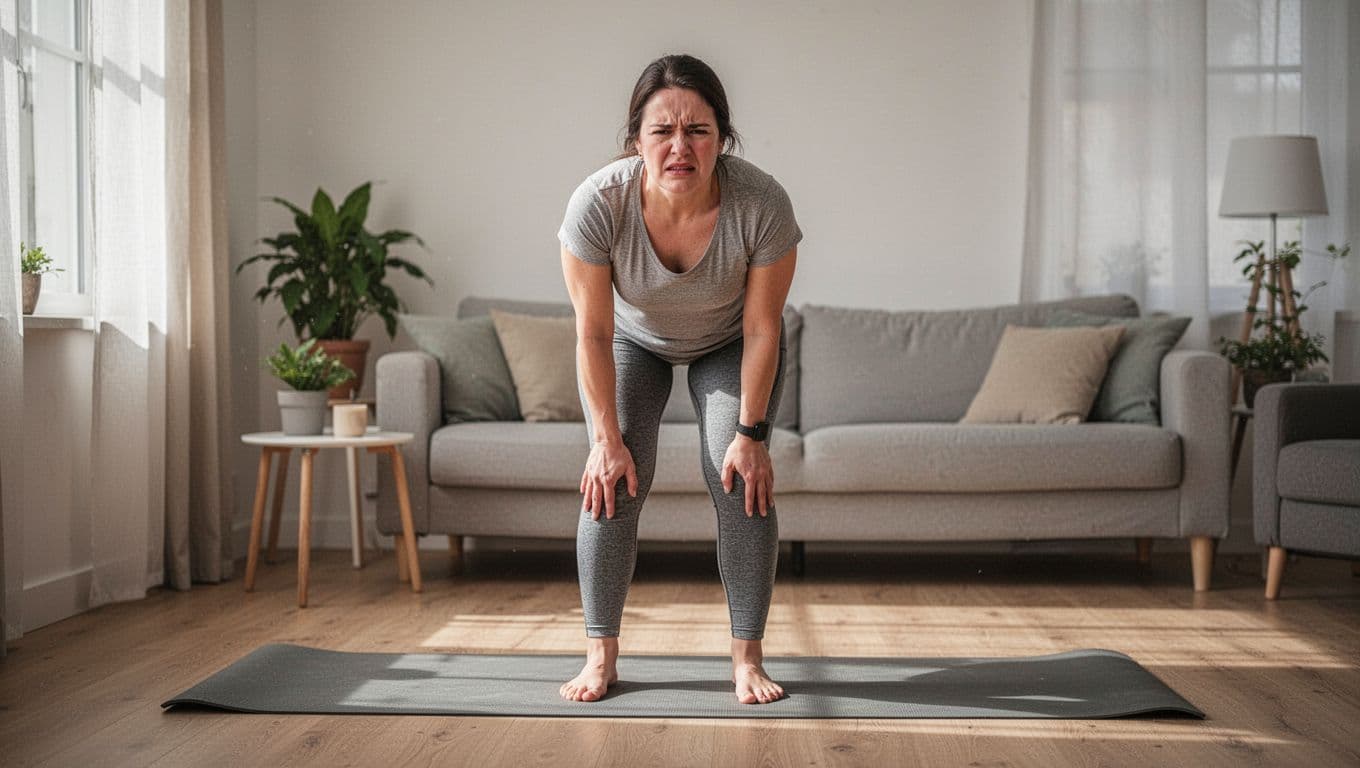
If you want a simple rule, use this one:
- Mild pull is fine
- Sharp pain means stop
- Bouncing stays out of your routine
- Breathing normally helps you relax into the stretch
If you feel pain, you’ve gone too far. Back off, reset, and try a smaller range.
Don’t treat flexibility as the only goal
Many beginners think tighter always means worse, so they keep stretching the same spot harder and harder. That can be a mistake. Sometimes tightness shows up because a muscle is weak, tired, or underused, not just because it needs more length.
That’s why your stretching routine should feel balanced. Stretch the tight areas, yes, but also keep moving, walking, and strengthening the muscles that support those joints. When you do both, your body usually feels better for longer.
Conclusion
A simple stretching routine works best when you keep it gentle, brief, and steady. You do not need perfect form or long sessions to feel a difference. A few daily moves can help you ease stiffness, move with more freedom, and give tight spots a chance to relax.
The biggest takeaway is consistency. When you stretch a little each day, your body gets used to moving in better ways, and that usually shows up in how you sit, stand, walk, and bend. That is why the routine in this post focuses on simple habits you can repeat, even on busy days.
Pick 3 stretches now and use them today. Track how your body feels over the next week, then notice where you feel looser, calmer, or less stuck. If you want, share your experience with someone else, because keeping the habit visible can help it last.
A beginner stretching habit does not need to be complicated to be useful. When you keep showing up for it, you give your body a better chance to feel good tomorrow, and that kind of daily care can stay with you for life.